
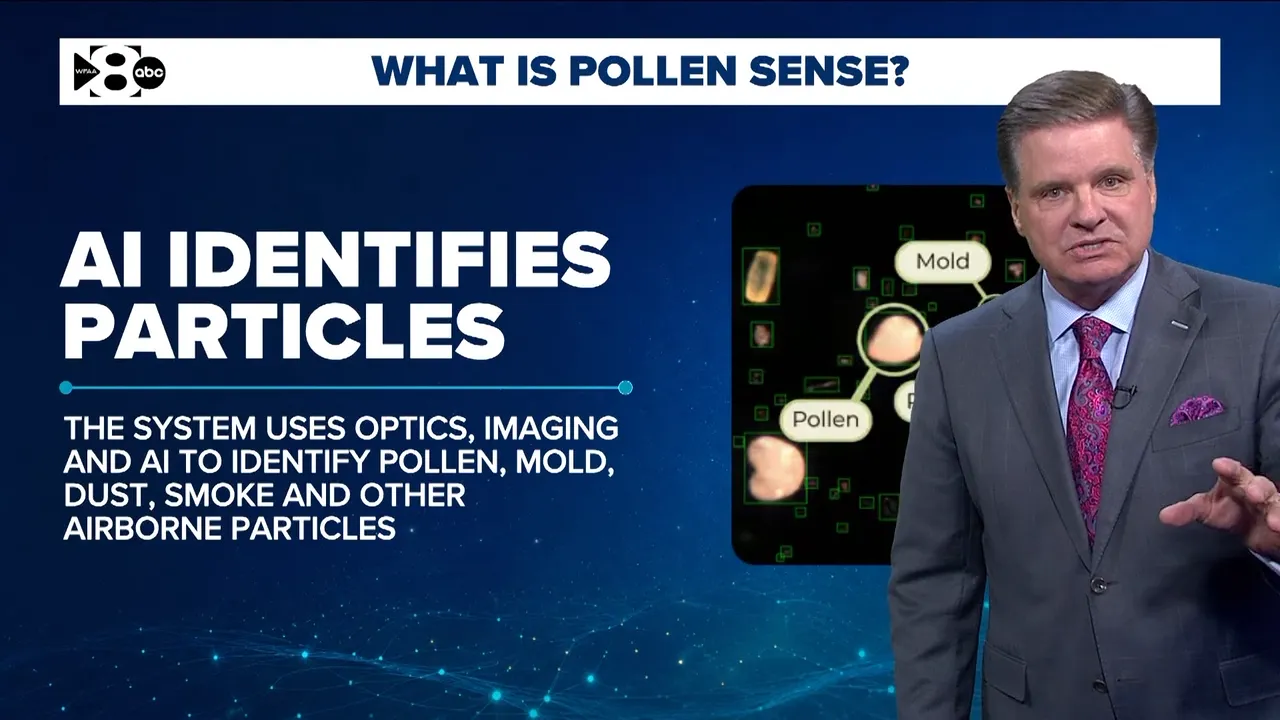
WFAA opened a recent weather segment with a simple but powerful point: Dallas-Fort Worth viewers now have access to live pollen and allergen information that most communities still do not.
Powered by Pollen Sense sensors across North Texas, WFAA’s allergy reporting now shows what is being measured in the air right now, not just what was counted yesterday.
That distinction matters. Traditional pollen reports are often based on manual samples collected the day before, counted later, and reported after conditions may have already changed. Pollen Sense sensors continuously sample local air and use optics, imaging, and AI to identify pollen, mold, dust, smoke, and other airborne particles with hourly updates.
For broadcast weather teams, that is a major upgrade. For allergy sufferers, it can be the difference between guessing and actually understanding what is affecting them.
A Real Viewer Story
For viewers like Pat in Austin, more specific allergy reporting has already changed the way symptoms make sense.
Pat spent years thinking pollen was the source of her bad allergy days. But after watching local allergy coverage powered by Pollen Sense, she started paying attention to the actual allergen mix being reported. The pattern pointed somewhere else: mold, specifically alternaria.
That changed the conversation. Instead of treating every bad day as “just pollen,” Pat could track symptoms against what was actually in the air, bring better context to her care, and make more informed decisions about when to be outside.
That is the point of live, specific allergy reporting. “High” or “low” is not enough when the thing affecting someone may not be pollen at all.
What WFAA Highlighted
- Live allergy information for Dallas-Fort Worth viewers
- Pollen Sense sensors sampling local air continuously
- Hourly updates instead of next-day manual counts
- AI-powered identification of pollen, mold, dust, smoke, and other airborne particles
- Hyperlocal data that helps viewers plan around current conditions
WFAA’s allergy page now gives North Texas viewers a clearer look at current conditions, including fungus, grasses, oak, goosefoot, willow, nettle, and other local airborne triggers.
Why It Matters
Allergies do not wait for yesterday’s report.
Conditions can shift by the hour. Mold can rise when pollen is low. Dust and smoke can complicate symptoms. A person can feel awful on a day that a generic pollen index makes look harmless.
Live allergen intelligence helps weather teams explain what changed, why it matters, and what viewers can do with that information. It also gives people a better way to connect symptoms with real measurements from the air around them.
This is what Pollen Sense was built for: making invisible particles visible, understandable, and useful in the moments when people are deciding how to live their day.
Segment transcript summary
For copyright reasons, this is a summary of the WFAA segment rather than a full verbatim transcript.
In the segment, WFAA explains that the station is starting with pollen because it now has new allergy information that is rare in Dallas-Fort Worth and uncommon across the country.
The coverage walks viewers through the WFAA allergy page, noting current moderate levels for fungus and grasses, with other listed allergens lower at the time of the broadcast.
It then explains that Pollen Sense sensors are operating across Dallas-Fort Worth and North Texas, continuously pulling in local air to measure what is actually floating around in real time.
The segment contrasts this with the older manual-count process, where air was sampled one day, counted later, and reported the next day. With Pollen Sense, that next-day manual-report delay is replaced by hourly updates.
The segment describes how the system uses optics, imaging, and AI to identify pollen, mold, dust, smoke, and other airborne particles, then updates allergy information hourly.
It closes by emphasizing that hyperlocal, current allergy data can help viewers plan their day and manage symptoms better because they can see what is happening now, not what happened yesterday.
Want this kind of live allergy reporting in your market? Contact Pollen Sense.