
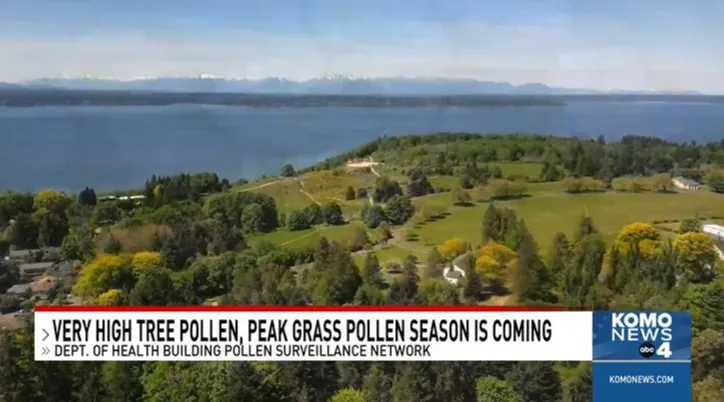
Spring showers bring May flowers, but they also bring a longer pollen season, according to the Washington Department of Health.
The department reports that pollen season in Washington starts almost three weeks earlier and lasts about a month longer than it did 30 years ago.
Tree pollen has been very high during the beginning of May. Grass pollen is expected to peak in mid-May. According to the DOH, one in four Washingtonians suffer from seasonal allergies.
To help those suffering from seasonal allergies, the DOH is building a pollen surveillance system that provides real-time pollen detection information.
“Our pollen monitors are continually monitoring pollen levels so we can see how much they vary during a day,” said Rad Cunningham, a senior epidemiologist and climate section manager at the DOH.
Cunningham explained the data collected from 10 pollen surveillance sites across Washington state is available on the Pollen Wise app.
“All of our monitors push data to the Pollen Wise app, and you can go look at what the pollen levels are, and you can even look at the specific pollens that you’re allergic to,” Cunningham said.
The DOH attributes the earlier and longer pollen season to climate impacts such as warmer temperatures, changes in rainfall patterns, and increased carbon dioxide in the air.
“Tree pollen starts earlier, and now we’re transitioning into a grass pollen season,” said Cunningham. “A lot of people with grass allergies are really feeling it right now, and the warmer temperatures certainly can contribute to that, as can climate change.”